
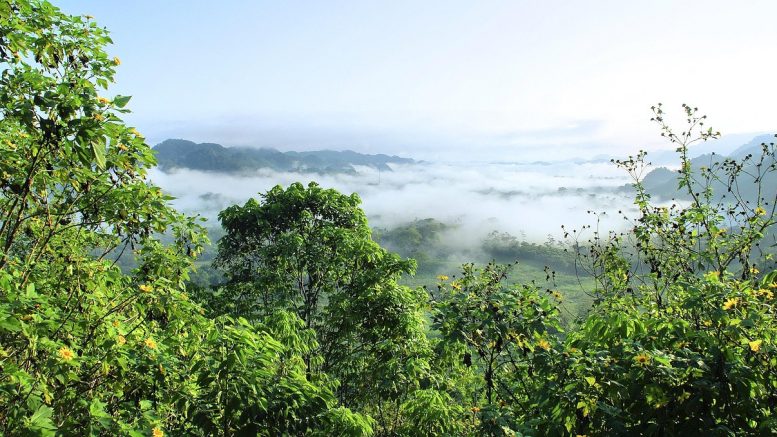
“…the absence of an independent monitoring and traceability mechanism weakens control over the expansion of soy cultivation into native forest areas…”
Mauricio Voivodic, Executive Director of WWF-Brasil, forest engineer and Master’s degree holder in Environmental Sciences from University of São Paulo.

Mauricio Voivodic, Executive Director of WWF-Brasil
AgriBrasilis – What was the main environmental benefit of the Soy Moratorium?
Voivodic – The Soy Moratorium is, without a doubt, the most effective voluntary multisectoral agreement ever implemented to control deforestation in the Amazon. Since 2008, only 2.1% of the deforestation recorded in the monitored municipalities has resulted in soybean planting and more than 13 thousand km² of forest have been preserved thanks to the agreement. The figure that best illustrates this success is the combination of production and conservation: between 2009 and 2022, the monitored municipalities recorded a 69% reduction in deforestation, while the soybean planted area in the Amazon biome grew by 344%. This proves that environmental protection and responsible agricultural expansion are compatible.
AgriBrasilis – What would be the immediate consequences of ending the agreement?
Voivodic – The withdrawal of companies from the agreement represents a serious setback, with consequences on multiple fronts. On the environmental side, the absence of an independent monitoring and traceability mechanism weakens control over the expansion of soy cultivation into native forest areas. The Amazon is an essential climate regulator for the entire continent: its “flying rivers” sustain rainfall patterns on which the country’s energy, water and food security depend. Undermining this balance directly affects agriculture in distant regions, such as southeastern and southern Brazil.
From an economic perspective, the consequences of ending the agreement are also significant: major markets worldwide demand deforestation-free commodities and ignoring these requirements undermines the competitiveness of Brazilian agribusiness and closes doors to valuable markets. The reputation built by the sector over nearly two decades is at risk.
AgriBrasilis – Does the weakening of Soy Moratorium set a precedent for the same to happen to other similar agreements?
Voivodic – The Soy Moratorium was designed as a replicable model and even inspired discussions around similar agreements for other commodities. When it is weakened, it sends a negative signal to the market and to civil society that voluntary multisectoral agreements can be abandoned when short-term pressures arise.
The Soy Moratorium was not terminated by legal imposition: it still exists, but has been deliberately hollowed out by the voluntary decision of companies to withdraw, despite having full legal ability to remain. This undermines the credibility of similar mechanisms in other biomes, such as the Cerrado, which is already under extremely high pressure from land conversion and has much weaker legal protection than the Amazon.
AgriBrasilis – What are the best indicators for detecting a worsening of deforestation and wildfires?
Voivodic – WWF-Brazil tracks a range of monitoring tools and systems consolidated by Brazilian science. For deforestation, PRODES – Satellite Monitoring Project of the Brazilian Amazon Rainforest Deforestation – (run by INPE – National Institute for Space Research) is the official reference, providing annual data on clear-cut deforestation in the Amazon. For near–real-time alerts, DETER – Real-Time Deforestation Detection System – (also from INPE) detects signs of vegetation suppression in short cycles and is essential for enforcement actions. MapBiomas complements this set with annual analyses of land use and land cover across all Brazilian biomes, enabling the tracking of long-term trends with high spatial resolution.
Data from PRODES, released in November 2025, already indicated that Mato Grosso was the only state in the Amazônia Legal to record an increase in deforestation in the recent period. For wildfires, monitoring of heat spots by INPE and Fire Monitoring Database are key indicators. The Cerrado should also be closely monitored, given that soybean cultivation has expanded primarily in this biome, where there is no zero-deforestation agreement with the private sector.
AgriBrasilis – Without the Moratorium, which measures are a priority to prevent a worsening of soy-related deforestation?
Voivodic – Individually, companies should maintain and expand their practices of excluding soy sourced from deforested areas from their supply and production chains, in line with consumer demand worldwide. Strengthening independent zero-deforestation monitoring initiatives is an essential tool to ensure that Brazilian soy maintains access to the most demanding international markets.
In addition, it is crucial to invest in georeferenced traceability of suppliers, using instruments such as the Rural Environmental Registry (CAR). Brazil has vast potential areas of degraded land that can be rehabilitated and incorporated into agricultural production without the need to advance into new forest areas; this should be the priority pathway for productive expansion. Finally, strengthening independent zero-deforestation monitoring initiatives are essential tools to ensure that Brazilian soy maintains access to the most demanding international markets.
Read more: