
“Brazil still does not have an integrated and continuous national database that allows for a comprehensive and accurate diagnosis of environmental contamination by pesticides…”
Robson Barizon is Head of Research and Development at Embrapa Environment, a research unit of the Brazilian Agricultural Research Corporation, focused on environmental sustainability. He holds a degree in Agronomy from the Federal University of Paraná (UFPR), a master’s degree from São Paulo State University (UNESP) and a PhD in Soil Science from the University of São Paulo (USP). He specialized internationally in Toxicology at the University of Guelph (Canada) and has recently expanded his professional expertise with an Executive MBA in Project Management from the University of São Paulo.

Robson Barizon, Head of Research and Development at Embrapa Environment
AgriBrasilis – What is the level of pesticide contamination in the environment?
Robson Barizon – Brazil still does not have an integrated and continuous national database that allows for a comprehensive and accurate assessment of environmental contamination by pesticides.
Over the past decade, there has been a significant increase in the number of studies conducted by Brazilian universities and research centers, based on localized and regional monitoring efforts. These studies have shown the presence of pesticide residues in different environmental matrices, such as surface waters, sediments and soils.
It is important to note that these studies are largely concentrated in regions with greater research infrastructure and data availability, which limits the extrapolation of their results to the entire national territory. Therefore, the higher frequency of detections observed in these areas largely reflects a sampling coverage bias, rather than a pattern that is necessarily representative of the country as a whole.
Even so, the available results indicate that the detected levels may pose risks to aquatic organisms and biodiversity, particularly when chronic exposures and the simultaneous presence of multiple compounds are taken into account.
AgriBrasilis – How does this contamination occur?
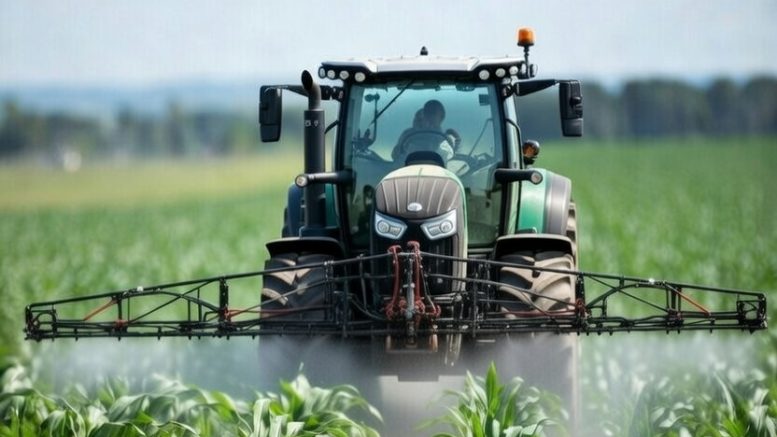
Robson Barizon – Environmental contamination by pesticides occurs mainly through the movement of these compounds after agricultural application. The main pathways include spray drift during application, atmospheric transport through volatilization and subsequent deposition and surface runoff associated with rainfall, which can carry residues into watercourses, reservoirs and sediments.
This scenario becomes more complex with the increase in extreme events, such as intense rainfall and high temperatures, which tend to intensify these transport pathways and make environmental control of pesticide use more challenging.
AgriBrasilis – Do good application practices guarantee the absence of environmental contamination? Why?
Robson Barizon – Good application practices are essential to significantly reduce the risk of environmental contamination, but they do not guarantee its complete elimination. This is because, even when all technical recommendations are followed, such as correct dosage, appropriate application technology and favorable weather conditions, part of the pesticides can still be transported through the environment by physical and chemical processes inherent to their use.
In Brazil, there is evidence of environmental contamination even in areas where the systematic adoption of good agricultural practices is presumed, such as large-scale sugarcane production regions characterized by higher levels of technological development and operational control. Similar results are observed in countries with more developed economies and more robust regulatory frameworks, indicating that the presence of residues in the environment is not associated solely with operational failures, but also with intrinsic limitations of the use of these inputs.
AgriBrasilis – Which application practices reduce environmental risks without compromising agronomic effectiveness?
Robson Barizon – Reducing the environmental risks associated with pesticide use requires an integrated approach that maintains agronomic effectiveness while minimizing losses to the environment. Soil conservation practices such as no-tillage systems, the maintenance of vegetative cover and proper crop residue management reduce erosion and surface runoff, thereby decreasing the transport of residues to water bodies. Within this set of strategies, Integrated Pest Management (IPM) plays a central role by rationalizing pesticide use based on monitoring and action thresholds, although it has been progressively neglected in many production chains in Brazil, contributing to increased reliance on chemical applications.
Complementarily, the proper use of application technology and digital agriculture tools enables more precise and efficient interventions, reducing losses due to drift and increasing control efficiency. Alongside these practices, landscape ecology measures such as the maintenance of Permanent Preservation Areas along watercourses act as buffer zones, reducing the exposure of sensitive environments and completing a strategy aimed at lowering environmental risks without compromising agricultural productivity.
AgriBrasilis – Do you consider environmental monitoring of pesticides to be adequate?
Robson Barizon – Environmental monitoring of pesticides is an essential tool for risk management, as it is only possible to properly manage what is known. In Brazil, however, there is still a significant gap in structured and continuous programs specifically dedicated to environmental monitoring, especially in matrices such as surface waters, sediments and soils.
Despite this, there are noteworthy initiatives, such as the Pesticide Residue Analysis Program in Food (PARA), coordinated by Anvisa, Brazil’s national health regulatory agency and Sisagua, a surveillance system run by the Ministry of Health to monitor the quality of water intended for human consumption. Sisagua plays an important role in water quality monitoring; however, by its very design, it has limitations in scope when it comes to assessing environmental and ecological risks, which reinforces the need for complementary environmental monitoring initiatives across Brazilian territory.
AgriBrasilis – What were Embrapa’s main findings regarding atrazine and its metabolites in the Dourados River Basin?
Robson Barizon – This specific study was conducted by another Embrapa team, under the coordination of researcher Rômulo Scorza Júnior. For technical rigor, it is most appropriate that the results be presented by the team directly responsible for the study.
AgriBrasilis – In this context, what actions are recommended to mitigate or minimize potential environmental damage?
Robson Barizon – Mitigating potential environmental damage requires the integrated adoption of different measures, beginning with soil and water conservation practices, such as no-tillage systems, maintenance of ground cover and terracing, which reduce surface runoff and the transport of residues into water bodies. In parallel, it is essential to reduce reliance on pesticides through Integrated Pest Management (IPM), with emphasis on biological control, combined with the selection of products with more favorable toxicological and environmental profiles whenever technically feasible.
Application technology also plays a role by increasing the efficiency and precision of spraying operations, reducing losses and potentially lowering the amount effectively applied without compromising agronomic effectiveness. Finally, the protection of watercourses through the maintenance of Permanent Preservation Areas and vegetated buffer strips completes this set of actions aimed at reducing environmental risks.
Read more: