
Asian Soybean Rust Has Already Reached 144 Reported Occurrences
Brazil
State of Mato Grosso do Sul recorded 53 companies under bankruptcy protection (US Chapter 11) in 3Q25. The state rate was 1.56 companies in judicial recovery for every one thousand active companies, with soybean farming leading requests. (RGF & Associados)
Low-carbon nitrogen fertilizers are beginning to approach economic viability in Brazil, with costs for renewable, hybrid, and fossil-based ammonia ranging between US$ 600 and US$ 1,000 per ton. Ammonia accounts for 60% to 90% of total costs and that 97% of nitrogen fertilizers used in Brazilian agriculture are imported. Brazil could produce 3.8 million tonnes of nitrogen per year, with 1.2 million tonnes coming from low-carbon sources, which is aligned with the National Fertilizer Plan. (Instituto E+ Transição Energética; Rocky Mountain Institute)
Nutrien has agreed to sell two fertilizer storage and mixture facilities in Araxá, State of Minas Gerais and Cristalina, State of Goiás, to Terrena Agronegócios, a company from Minas Gerais. The deal still requires clearance from the Administrative Council for Economic Defense. The transaction value was not disclosed. (Nutrien)
Sulboro, a boron fertilizer manufacturer, said it invested US$ 5 million in 2025, mainly to build a new industrial plant in Montenegro, State of Rio Grande do Sul, inaugurated in December 16th, which is expected to triple annual output. Of the total, US$ 4.64 million went to the new facility (US$ 3.34 million financed by Brazil’s National Bank for Economic and Social Development and US$ 1.30 million from the company’s own funds), while another US$ 370 thousand was invested to adapt the Canoas unit for new products. The company is targeting about 25% annual growth, aiming to reach full capacity by 2030. (Sulboro)
The Brazilian company Biotrop will take over management of the BioWorks division, focused on biopesticides and biostimulants for horticulture. The operation is presented as part of the internationalization strategy, strengthening its presence in the US and the EU. (Biotrop)
Brazil’s citrus sector will gain a new applied research hub, CPA Citros, based at Luiz de Queiroz College of Agriculture in Piracicaba, State of São Paulo. The initiative brings together São Paulo Research Foundation, Luiz de Queiroz College of Agriculture and the Fund for Citrus Plant Protection, with a planned US$ 16.78 million investment over five years, focused mainly on solutions to control greening. (Esalq/USP)
Felipe Vieira is the new Commercial Director of PI AgSciences in Brazil, tasked with building and leading the commercial team and accelerating demand generation. (PI AgSciences)
Bruno Zuntini is the new Market Development Technical Director at Syngenta. (Syngenta)
The Government of Tocantins opened a re-registration window for agricultural establishments, tied to updating official records used in sanitary and inspection activities. Farmers and responsible parties are instructed to regularize their information with the state agricultural defense authority. (Agência Tocantins)
Brazilian Institute of Environment and Renewable Natural Resources issued a precautionary suspension, within the ongoing environmental reanalysis of fipronil, of Environmental Hazard Assessment outcomes for specific use scenarios involving seed treatment, soil application and seedling immersion, citing potential risk to bees and a lack of interest by registration holders in supporting certain scenarios. The notice also corrects a 2022 act to resume processing of applications for registration and registration changes of formulated products containing fipronil, under the Law No. 14785/2023, and states that new unauthorized scenarios must submit all required data for re-analysis, under equal-treatment requirements. It further reiterates the continued suspension of recommendations for full-area foliar spraying of fipronil products under environmental reanalysis. (Ibama)
Agricultural engineer Hugo Centurion has assumed the directorship of Ascenza Brasil. (Ascenza Brasil)
The Supreme Federal Court dismissed (by majority) Direct Actions of Unconstitutionality 5553 and 7755, which sought to strike down tax benefits granted to pesticides, including provisions of the National Council for Fiscal Policy Agreement No. 100/1997 (Tax on Circulation of Goods and Services) and the zero rate of the Tax on Industrialized Products under Decree No. 11158/2022 (formerly Decree No. 8950/2016). The prevailing opinion was authored by Justice Cristiano Zanin (opinion writer), with Justices Edson Fachin and Cármen Lúcia dissenting (would have granted the claims) and Justices André Mendonça and Flávio Dino partially dissenting. In practical terms, the ruling preserves the current tax relief framework. (STF)
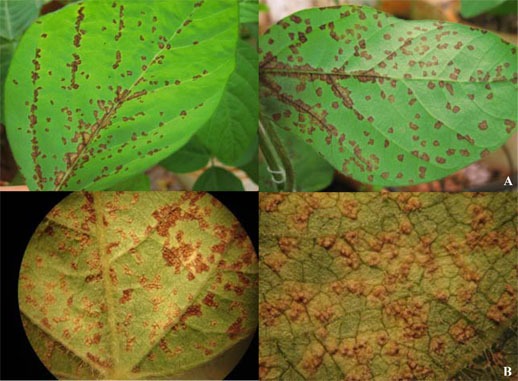
Asian soybean rust has already reached 144 reported occurrences in Brazil in early January 2026, concentrated mainly in the States of Paraná (88) and Mato Grosso do Sul (44), according to the Anti-Rust Consortium. Researcher Cláudia Godoy, from the Brazilian Agricultural Research Corporation’s Soybean Unit, says the higher count reflects stronger field detection and spore circulation rather than loss of control, underscoring the need for close scouting and proper fungicide management. Key risk drivers include volunteer soybean plants and earlier sowing windows in southern areas, plus the recommended use of multi-site fungicides in mixtures amid rising resistance of Phakopsora pachyrhizi. (Consórcio Antiferrugem)
Ministry of Agriculture and Livestock published a summary of pesticide post-registrations, including 21 requests for the cancellation of registrations and/or registration claims. (Official Gazette of Brazil, Act No. 2 of 01/09/2025, Ministry of Agriculture)
Formoso Group, owner of Uniggel Sementes, files for bankruptcy protection (US Chapter 11). The Group owes approximately US$ 241,5 million. One of the factors that led the company to this decision was the judicial reorganizations filed by its own customers. (Grupo Formoso)

Latin América
Nissan Chemical America Corporation appointed Diego Fernando Pereira as leader of Marketing and Development for Latin America. The company highlights his experience across biologicals, plant growth regulators, biostimulants, crop protection and plant nutrition. (Nissan Chemical America Corporation)
France said it will tighten inspections and suspend imports from South America of fruits and other foods if they contain residues of active substances banned in the European Union, such as mancozeb, glufosinate, thiophanate-methyl and carbendazim. The measure was communicated by Agriculture Minister Annie Genevard and Prime Minister Sébastien Lecornu and is expected to be formalized by decree in the coming days, with reinforced checks at entry points. The announcement comes amid farmer protests and political pushback against the European Union–Mercosur trade deal. (Government of France)
According to Carlos Campos Alfaro, president of Costa Rica’s Association of Agroinput Formulators and Marketers, generic agrochemicals are strategic for agricultural competitiveness by lowering production costs and improving access to crop-protection tools, provided they meet technical and regulatory requirements. The article calls for a faster, transparent, science-based registration system to expand legal options and reduce the risk of illegal or unregistered product use. (Asoagro)
In Uruguay, a specific internal tax (IMESI) is being considered for active ingredients classified by the World Health Organization as “extremely” or “highly” dangerous (categories 1a and 1b). The charge is set per liter or kilogram of active ingredient (including when contained in formulated products), capped at 25 inflation-indexed units (UI) per liter/kilogram. The government frames it as an environmental tool to discourage the most toxic substances, while critics warn about cost pass-through to farmers and competitiveness impacts. (Government of Uruguay)
Granular urea produced by Yacimientos Petrolíferos Fiscales Bolivianos, the State owned company from Bolivia, has obtained certification from the Bolivian Institute of Standardization and Quality, referencing ISO 18642:2024. The Bolivian Chamber of Hydrocarbons and Energy says the seal strengthens market confidence and supports the product’s export competitiveness. (Cámara Boliviana de Hidrocarburos y Energía)
BASF appointed Igor Teles Oliveira as leader of Strategic Marketing for Seed Treatment in Latin America. (BASF)
Mexican researchers indicate that glyphosate-based herbicides do not impair viral biological control against Spodoptera frugiperda under laboratory and greenhouse conditions. The authors report no relevant changes in larval growth, survival, or development at recommended herbicide doses. (Inecol)
READ MORE:
Brazilian Agribusiness Still Under Pressure From US Tariffs