
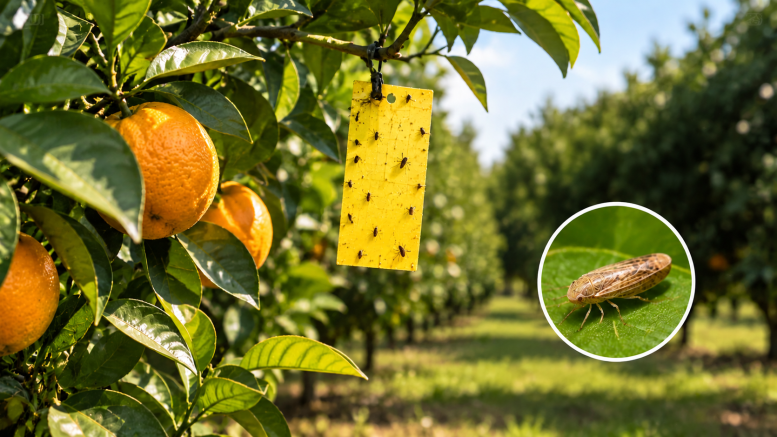
Argentina Reports 56.3% Reduction in Citrus Greening Vector
Brazil
MAPA restored the validity of 22 pesticide registrations of glyphosate and 2,4-D after requirements under Notice No. 1/2025 were met. The list includes technical and formulated products. Penalties for earlier noncompliance remain possible. (Official Gazette of Brazil, Act No. 73 – published on 11/23/26, MAPA)
MAPA reported rules issued by the General Administration of Customs of China on quarantine treatments for plant products, including bulk cargo fumigation. Notice No. 111/2026, effective since September 1st, 2026, provides for risk-based inspections, remote supervision and prior approval of treatment plans. Available at: https://tinyurl.com/ycxjsma3 (MAPA, DIPOV Notice – 11/19/26)
Anvisa published the voluntary withdrawal of nine pesticide evaluation requests, including five from Gênica Inovação Biotecnológica, two from CHDS and two from Rainbow. (Official Gazette of Brazil, Resolution No. 4,537 – published on 11/23/26, Anvisa)
In compliance with a court decision, Anvisa approved the toxicological evaluation of chlorantraniliprole (GSP Agroquímica). (Official Gazette of Brazil, Resolution No. 4,540 – published on 11/23/26, Anvisa)
The Brazilian National Institute of Industrial Property and CropLife Brasil signed a 36-month technical cooperation agreement on intellectual property in seeds, biotechnology, crop protection and bioinputs. Activities include training and information exchange without transfers of funds. (INPI – 11/19/26)
The Brazilian Innovation Funding Agency released trial results with a bioinput made from a fungus (Trichoderma sp.) native to the Pantanal Biome developed by Pantabio, a bioinput company based in the State of Mato Grosso do Sul. According to the company, irrigated bean trials in the State of Mato Grosso do Sul showed an average gain of 20 bags/ha. Eucalyptus trials indicated 17% taller plants and 22% lower mortality. Available at: https://tinyurl.com/3y3zusfc (Finep – 11/19/26)
The government of the State of Mato Grosso launched a fertilizer development initiative involving public institutions, companies and universities. A study by the Federal University of Mato Grosso projects 29–39% higher fertilizer demand by 2034, equivalent to an additional 2.82–3.83 million t annually. Fertilizer imports to the state totaled 11.4 million t in 2025. (Government of Mato Grosso; Sedec-MT – 11/20/26)
Veeries, an ag market intelligence company, estimates nearly half of the input market for the second corn crop, including fertilizers, seeds and pesticides, has yet to be negotiated. About two-thirds of the fertilizer volume has already been sold. According to the company, purchases concentrated in the 1Q27 could strain logistics, while part of the nitrogen fertilizer supply depends on ships expected in February and March. (Veeries – 11/23/26)
The Brazilian National Bank for Economic and Social Development approved approximately US$ 620 million in credit for fertilizer production through October 2026, the highest annual amount on record, and expects approvals to reach approximately US$ 670 million for the year. Since 2023, approvals have totaled approximately US$ 1.39 billion for projects including new plants, innovation and mining. (BNDES – 11/24/26)
Simbiose, a bioinput manufacturer, launched a corn inoculant based on gene-edited Azospirillum brasilense bacteria. According to the company, the technology aims to increase nitrogen release to plants and was developed with Orygen Research and the Federal University of Paraná. (Simbiose – 11/24/26)
The State University of Northern Paraná expects to open a bioinput plant in Bandeirantes, State of Paraná, in March 2027. The project received approximately US$ 260 K from the state government and could produce up to 1.5 K L of bioinputs per week in the initial phase, primarily serving small-scale vegetable farmers. (UENP – 11/24/26)
According to Mosaic, phosphate fertilizer sales in Brazil fell 22.5% from January to August 2026 compared with the same period in 2025. The company said it had temporarily suspended production at Brazilian facilities because of high sulfur costs. The company partnered with Scheffer Group to develop biological plant nutrition solutions, with royalties for Scheffer and a launch expected from 2028. Scheffer invested over US$ 16.7 million in bioinputs over the past four years. (The Mosaic Company; Scheffer – 11/23/26)
Brazilian urea imports totaled 4.6 million t from January to October 2026, down 19% from the same period in 2025, according to a report released by the Brazilian Confederation of Agriculture and Livestock. The organization also reported that the queue of vessels carrying urea at Brazilian ports fell from more than 1.3 million to approximately 880 K t. (CNA – 11/19/26)
Ibama issued US$ 40 K in fines for irregularities involving pesticide use and storage during inspections in the northern part of the State of Rio de Janeiro. Inspectors also seized a spraying drone valued at US$ 35 K. (Ibama – 11/21/26)
Nufarm reported 25% growth in consolidated underlying EBITDA for the fiscal year that ended September 2026. Underlying EBIT more than doubled, free cash flow improved and net leverage declined from 2.7 to 2 times. (Nufarm – 11/19/26)
The Brazilian Federal Highway Police seized 500 kg of pesticides during highway inspections in the State of Paraná from November 19th to 22nd. In a separate operation, federal and state police seized 20 packages of smuggled pesticides aboard a vessel from Paraguay in Itaipulândia. (Federal Highway Police – 11/23/26; Federal Police)
Farmers from São José do Rio Claro, Diamantino and Tangará da Serra, in the State of Mato Grosso, reported periods of up to 29 days without rain, pest attacks and the need to replant soybean fields. In Tangará da Serra, one farmer said low soil moisture reduced the effectiveness of pre-emergence herbicides and post-emergence applications caused phytotoxicity symptoms in plants affected by water stress. Available at: https://tinyurl.com/bdhtby5f (Aprosoja MT – 11/19/26)
The Agricultural Defense Agency of the State of Tocantins reinforced guidance to prevent cassava witches’ broom, caused by the fungus (Ceratobasidium theobromae). The agency conducts preventive monitoring in farming areas. The disease has not been recorded in the state. (Adapec – 11/19/26)
AgroGalaxy, an ag input distributor under bankruptcy protection [similar to US Chapter 11], postponed the release of the 2025 financial statements from November 30th, 2026, to February 26th, 2027. The 3Q26 results, previously scheduled for November this year, were rescheduled for August 30th, 2027. The company cited the need for more time to prepare and review financial information after internal restructuring. (AgroGalaxy – 11/23/26)
UPL Brasil reported field trials with a kasugamycin-based fungicide-bactericide registered to control corn stunt diseases, showed yield gains of approximately 6 bags/ha in areas with low disease pressure and more than 20 bags/ha in areas with higher incidence. According to the company, trials were conducted in demonstration fields and in partnership with consulting firms. (UPL – 11/23/26)
The Environmental Military Police dismantled an illegal pesticide adulteration facility in Franca, State of São Paulo, and arrested three people. The operation seized more than 16 K L of chemicals and adulterated or counterfeit pesticides, including 11,020 L in a truck intercepted in Barretos. (Military Police of São Paulo – 11/23/26)

Latin America
The National Monitoring Network in Argentina recorded a slight increase in the corn leafhopper (Dalbulus maidis) in the northwest, northeast and Litoral regions during the first half of November. In the Litoral region, the average was 2.97 insects per trap, compared with 1.15 in the same period of 2025. The network recommends monitoring fields from crop emergence and controlling volunteer corn plants. (CREA – 11/19/26)
Research by the National Institute of Agricultural Technology and the National Scientific and Technical Research Council in Argentina identified additional returns of US$ 90–150/ha from nitrogen fertilization in corn compared with plots without nitrogen application. The study covered 16 environments over six seasons and identified economically optimal rates of 60–140 kg/ha of nitrogen. (INTA – 11/19/26)
The National Institute of Agricultural Technology in Argentina reported a 56.3% reduction in the Asian citrus psyllid (Diaphorina citri), the citrus greening vector, in an integrated pest management trial in Corrientes. The system combined monitoring, biological control using the parasitoid wasp (Tamarixia radiata), cover crops and selective pesticides and recorded 29% more natural enemies than conventional management. (INTA – 11/19/26)
Tropfen, an agricultural input company, inaugurated an industrial plant in Pergamino, Argentina, with an investment of US$ 1.5 million and projected capacity of 3 million L/year. The facility will initially focus on packaging, with production scheduled for the 1Q27. The company distributes adjuvants, biostimulants, fertilizers and biological products. (Tropfen – 11/19/26)
The National Association of Manufacturers and Importers of Crop Protection Products in Chile held a meeting on pesticide risk assessment for human health with the Inter-American Institute for Cooperation on Agriculture and the US Department of Agriculture. Discussions addressed international procedures for establishing maximum residue limits based on dietary exposure and extrapolating data between crops. (IICA – 11/20/26)
The Agricultural and Livestock Service of Chile released more than 178 K sterile male Mediterranean fruit flies (Ceratitis capitata) following a new outbreak in Ovalle. Measures include trapping, fruit sampling and restrictions on moving fruit outside the regulated area. The agency updated quarantine information for 16 markets following outbreaks in Lipangue, Algarrobo and Copiapó, including China, India and Mexico. (SAG – 11/23/26)
The Agricultural Institute of Colombia released a phytosanitary alert concerning the mealybug (Heliococcus novovillei), linked to sugarcane and pasture damage in North America. The pest has not been reported in Colombia. The agency highlighted possible introduction through plant material and animal movements and recommended preventive surveillance. Available at: https://tinyurl.com/32fdhjab (ICA – 11/19/26)
A rice farmer in Olancho, Honduras, reported yields exceeding 9.7 t/ha with a herbicide-resistant variety, compared with a traditional average of 4.5–4.9 t/ha using conventional seeds. According to the Ministry of Agriculture, the variety is resistant to specific herbicides, facilitating control of red rice (Oryza sativa). (SAG – 11/21/26)
SICIT, an Italian biostimulant manufacturer, aims to generate 10–20% of revenue in Brazil within five years and is considering building a plant in the country, according to CEO Sergi Barrull. On November 10th, the company inaugurated a facility in Mexico that converts leather waste into ag inputs. (SICIT – 11/24/26)
The Agriculture Department of Michoacán of Mexico announced increased inspections at five phytosanitary checkpoints to prevent the spread of avocado pests. The state recognizes 185.7 K ha across 50 municipalities as free from avocado seed weevils (Heilipus lauri, Conotrachelus aguacatae and Conotrachelus perseae). (Sader Michoacán – 11/19/26)
Researchers from the University of Colima and from other partner institutions identified 11 parasitoid species of the fall armyworm (Spodoptera frugiperda) in corn in the State of Colima, Mexico, six of them recorded in the state for the first time. Parasitism rates were 22.65% and 28% in two periods with different management and surrounding conditions. (University of Colima – 11/20/26)

READ MORE: