
Logistics Remains One of Brazilian Agribusiness’ Biggest Costs
Brazil
Anvisa approved toxicological evaluation of a new microbiological product – active ingredient not yet registered in Brazil – based on Pseudomonas fluorescens, from Simbiose. (Official Gazette of Brazil, Resolution No. 2,560 – published on 06/29/26, Anvisa)
Research evaluated the use of glufosinate for pre-harvest desiccation in wheat. The experiment, carried out in Canguçu, Rio Grande do Sul state, showed doses of 100 mL/ha and 200 mL/ha applied at Zadoks stage Z87 [hard dough stage] did not cause yield losses. However, the 300 mL/ha dose reduced production by almost 20%, possibly by interrupting the final remobilization of assimilates to the grains. According to the researchers, the practice can anticipate wheat harvest, but depends on the correct dose and application timing. (FURG; UFPel)
The Integrated Agricultural Development Company of the State of Santa Catarina confirmed Amaranthus palmeri outbreak, known as Palmer amaranth, on a farm in Campo Erê, in the West of the State. Integrated control and containment measures were adopted to prevent the plant from spreading. The weed is considered one of the most aggressive in agriculture due to its high dispersal potential, strong reproductive capacity and history of herbicide resistance. The Ministry of Agriculture classifies Amaranthus palmeri as a present quarantine pest and maintains a national program with prevention, detection, delimitation and control measures. (Cidasc; MAPA)
Embrapa identified a biological strategy to control the green-belly stink bug (Diceraeus melacanthus), a pest that can cause yield losses of up to 30% in corn. Researchers from Embrapa Genetic Resources and Biotechnology observed that applying the beneficial fungus Beauveria bassiana to corn leaves changes the volatile compounds released by the plant, attracting the parasitoid wasp Telenomus podisi, which eliminates the pest’s eggs. The results were published in the Journal of Pest Science. According to Embrapa, the next step will be field testing to develop an integrated pest management protocol. (Embrapa)
Petrobras signed contracts with companies that won the public tenders to complete the Nitrogen Fertilizer Unit III, in Três Lagoas, State of Mato Grosso do Sul. The project will receive investments of more than US$ 970 million and is expected to begin commercial operations in 2029. The unit will have capacity to manufacture 3,600 tonnes of granulated urea and 2,200 tonnes of ammonia per day, with estimated annual output of 1.3 million tonnes of urea. (Petrobras)
Imports of chemical pesticides reached US$ 4.28 billion from January to May of 2026, a decrease of 6.8% when compared to the same period of 2025. Regarding volume, imports decreased 6.5%, reaching 502,600 tonnes. The figures reflect a market adjustment, with lower average prices and a higher share of generic products. Imports of formulated products reached US$ 1.4 billion, slightly more than 1/3 of the total. Among formulated products, herbicides led imports, with US$ 471 million and 112 thousand tonnes, followed by insecticides, with US$ 295 million, and fungicides, with US$ 249 million. (CropLife Brasil)
Research identified cacao clones with greater tolerance to witches’ broom disease (caused by the fungus Moniliophtora perniciosa) and better adaptation to conditions of the Amazon Biome. The study evaluated 25 cultivars at the Frederico Afonso Experimental Station, in the State of Rondônia. Clones EEOP 63 and EEOP 65 stood out for combining higher yields, nutritional balance and lower disease incidence. The selection of cultivars with suitable genetics, combined with nutritional management, can increase yields and reduce dependence on fungicides and fertilizers. (Agência FAPESP; Scientific Reports)
Survey by Fundação SOS Mata Atlântica identified contamination in all 14 points analyzed along the Tietê River, in the State of São Paulo. The 2025 Tietê Expedition covered more than 1,100 km, from the river’s source in the city of Salesópolis to its end at the Paraná River. The analyses found microplastics in all evaluated points, as well as 25 types of pesticides and 16 substances including pharmaceuticals and illicit drugs. In the Middle and Lower Tietê sections, the results showed stronger influence of agriculture, associated with sugarcane, soybean and citrus areas. (Agência Brasil; SOS Mata Atlântica)
3tentos opened up eight stores in the States of Goiás, Pará, Tocantins and Minas Gerais, expanding the presence in strategic regions of Brazilian agribusiness. The units are already operating in Rio Verde, Goiatuba and Jataí, State of Goiás; Santana do Araguaia and Redenção, State of Pará; Palmas, State of Tocantins; Uberlândia and Uberaba, State of Minas Gerais. Each unit includes a commercial and administrative center integrated with an agricultural inputs distribution center, with an average investment of US$ 420 thousand. The company now has 81 stores in Brazil. (3tentos)
Soybean sanitary fallow period is in effect in the State of Mato Grosso do Sul and will continue until September 15th. During this period, farmers are prohibited from keeping live soybean plants, including volunteer plants, as a measure to control Asian soybean rust. After the period ends, sowing for the 2026/27 crop season will be allowed from September 16th to December 31st, 2026. (Famasul)
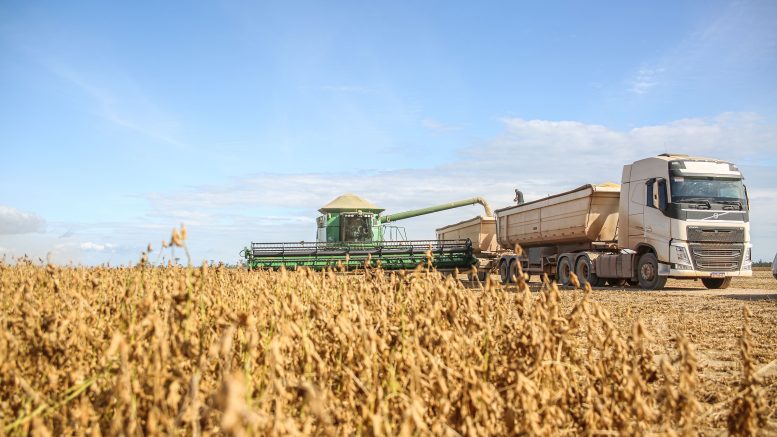
Logistics is one of the main costs in Brazilian agribusiness. The sector’s supply chains generate an annual flow of more than 1 billion tonnes of cargo, including food, biofuels, fertilizers, pesticides and machinery. In the case of commodities, freight can account for 30% to 40% of price composition, due to heavy dependence on road transport, long distances between producing regions and ports and infrastructure bottlenecks. This scenario has increased the relevance of logistics management solutions, route monitoring, data analysis and greater use of modes such as railways and waterways to reduce costs and improve the competitiveness of Brazilian agribusiness. (ESALQ-LOG)
Study found price differences of up to 77% for the same biopesticide in Brazil, depending on the purchasing channel. The survey analyzed the 20 most used bioinsecticides and bionematicides on Brazilian farms in the 2025/26 season, based on anonymized invoices and operational data from rural properties. According to Aegro, direct purchases from manufacturers can reduce the price per liter by up to 60% in larger-volume negotiations, compared with other channels such as cooperatives and resellers. The study also identified products formulated with Bacillus velezensis costing between US$ 6 and US$ 10 / ha. In addition to prices, the survey pointed to management failures, including underdosing in biopesticide applications, which may reduce the effectiveness of biological control. (Aegro Insights)
The root maggot fly Delia sanctijacobi was recorded for the first time causing damage to soybean crops in Brazil, in farms in the cities of Saldanha Marinho and Cruz Alta, in the State of Rio Grande do Sul. The pest attacked roots, cotyledons and seedling stems, reducing plant stands by up to 30%. Identification was confirmed through morphological analysis and DNA sequencing. According to the researchers, there are still no insecticides specifically registered to control the species in soybean in Brazil, highlighting the need for further management studies. (Entomological Communications; CCGL-TEC)
The Agricultural Defense Agency of the State of São Paulo fined a farmer in the city of Casa Branca for maintaining an irrigated soybean field during the sanitary fallow period. In the São João da Boa Vista region, the period began on June 12th and runs until September 12th, 2026. Inspectors found soybean plants grown in rows under a center-pivot irrigation system, rather than only volunteer plants. The farmer was ordered to eradicate the crop, a measure aimed at reducing the risk of Asian soybean rust, caused by Phakopsora pachyrhizi, to prevent the selection of fungicide-resistant populations. (Agricultural Defense Agency of the State of São Paulo)
Expectations over rural debt renegotiation in Brazil have led farmers to postpone input purchases for the 2026/27 crop season, especially fertilizers. Soybean farmers had purchased 68% of the expected fertilizer volume by the 1H of June, below the five-year average of 75%. Veeries reported that, considering soybean, corn, cotton, sugarcane, wheat and coffee, purchases reached 50% of the expected volume, compared with an average of 60%. The delay is attributed to high prices, elevated interest rates, rising farm defaults, uncertainty over debt renegotiation and the impacts of the wars in Iran and Ukraine on the fertilizer market. (Agrinvest Commodities)
Brazil’s fertilizer industry warned about the risk of production shutdowns due to a global shortage of sulfur, an essential raw material for the manufacture of phosphate fertilizers. According to the National Union of the Fertilizer Raw Materials Industry, sulfur stocks have reached levels considered alarming and could compromise supply for the next crop. The problem, which had already emerged before the war in the Middle East, was aggravated by the conflict. At OCP Group, a State-owned company from Morocco and one of the world’s largest phosphate fertilizer producers, stocks are reportedly down by approximately 40%. (Sinprifert; OCP Group)
The Agricultural Defense Agency of the State of Piauí – Adapi began requiring electronic control of pesticide stocks, sales and agronomic recommendations through the Integrated Agricultural Defense System. The measure requires registered dealers to report the inflow and outflow of products, lot number, expiration date, invoice, agronomic recommendation and also the destination rural property. Sales will only be allowed with identification of the farmer and the property previously registered with Adapi. According to the state government, the measure expands traceability and modernizes pesticide inspection in Piauí. (Government of Piauí; Adapi)
State of Goiás published Law No. 24389/2026, amending state legislation on the production, storage, commercialization, transportation, use, disposal of waste and packaging, inspection and oversight of pesticides. The rule aligns state legislation with Brazil’s new federal regulatory framework, updates definitions, strengthens control over registration, commercialization, storage, application and return of empty packaging, and creates a category of very serious infractions, such as falsification, adulteration, irregular changes to labels and package inserts, and improper disposal of packaging. Bioinputs are no longer covered by this state legislation and will follow specific federal legislation. (DOE-GO, Law No. 24389/26 – published on 06/29/26, Government of Goiás)
Latin America
Researchers from Argentina and Chile
2nd Federal Oral Court of Rosario acquitted farmers, an agronomist and a pesticide applicator charged in a case involving improper agrochemical spraying in Pergamino, Buenos Aires province, Argentina. The court stated there was insufficient evidence to establish the causal link required for individual criminal convictions. However, two former municipal officials were sentenced to two years of suspended imprisonment and barred from public office for four years due to failures in inspection and control. The judges stressed the acquittal of the farmers does not deny the existence of environmental or health damage, but distinguishes such damage from the level of evidence required for criminal liability. (2nd Federal Oral Court of Rosario)
Bolivian scientist Marisel Mamani is researching biotechnological alternatives to reduce agrochemical use in Bolivia. Her work involves identifying Trichoderma spp.
Ciagropa, a company of the Dekalpar Group, has expanded its presence in the agrochemical market through the industrial plant in Villeta, Paraguay, which has an installed capacity of more than 20 million liters per year. The company manufactures crop protection formulations, including soluble liquids, emulsifiable concentrates, suspension concentrates, water-dispersible granules, and biostimulants. Paraguay’s crop protection market moves approximately 100 million liters per year and generates approximately US$ 500 million in direct sales from manufacturers to distributors. Ciagropa has also started operations in Brazil under the Dekalpar brand and is evaluating opportunities in other regional markets. (Dekalpar Group)
Geocycle, a subsidiary of Holcim Mexico, and the civil association Amocali signed an agreement to expand the processing of empty agrochemical packages in Mexico. The goal is to process up to 2,600 tonnes per year of packages that have undergone triple rinsing, transforming hazardous waste into inputs for cement kilns. The initiative aims to increase collection rates, reduce health and environmental risks, and prevent soil and aquifer contamination. Actions will focus on Campeche and the Lerma-Santiago, Atoyac and Tula river basins. (Holcim Mexico; Amocali)

READ MORE: