
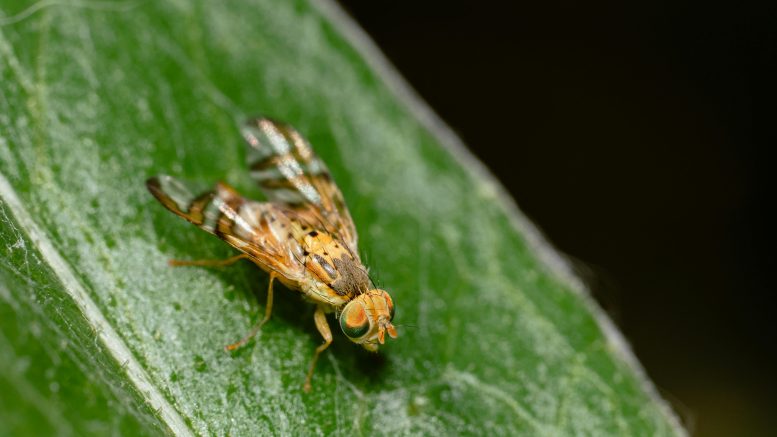
Chile Expands Quarantine Area to Contain Mediterranean Fruit Fly
Brazil
Anvisa approved, in compliance with court decisions, the toxicological evaluation of prothioconazole 250 g/L EC (ALBAUGH); and pydiflumetofen + azoxystrobin + difenoconazole (SYNGENTA). (Official Gazette of Brazil, Res. 2086 and 2087 – published on 05/25/26, Anvisa)
Daniel Zanetti Del Bianco has been promoted to executive director of Research & Development at IHARA. The move strengthens the company’s structure in innovation and development of solutions for the agricultural sector. (IHARA Defensivos Agrícolas)
Indofil launched a new pesticide product based on mancozeb, prothioconazole and picoxystrobin. The company expects to sell approximately 3 million L of the product in 2026. (Indofil Brasil)
Embrapa presented the BRS 7583 conventional soybean cultivar, aimed at the premium non-GMO soybean market. The material is recommended for the States of Goiás, Minas Gerais, Mato Grosso, Bahia and the Federal District, with a 105 to 121-day cycle, production stability and superior plant health, which may require fewer crop protection applications compared with other cultivars. (Embrapa)
State of Paraná Rural Development Institute trained small-sized farmers in the city of Janiópolis on the production of bioinputs. The workshops covered the use of efficient microorganisms, including practical steps for capture in forest litter, selection, multiplication and fermentation for application in vegetable crops, grains and dairy production. The initiative aims to expand the use of bioinputs and support organic family farming in the State of Paraná. (IDR-Paraná)
Research by São Paulo State University, QueenNut and Embrapa Environment identified native macadamia bacteria with potential for bioinputs against crop diseases. Serratia ureilytica, Bacillus subtilis and other species reduced the action of fungi associated with raceme blight and stem blight. Next steps include bioinput formulation and economic feasibility assessment. (Embrapa)
Farmers in the State of São Paulo may use credits from the Tax on Circulation of Goods and Services through the e-CredRural system, managed by the São Paulo State Finance and Planning Department. State regulations allow the appropriation of credits related to inputs, diesel and machinery used directly in production activities, provided they are properly documented and registered in the official system. (São Paulo State Finance and Planning Department)
State of Santa Catarina recorded high circulation of maize rayado fino virus (MRFV) in 2025/26. The pathogen was the most frequent in the survey by the Agricultural Research and Rural Extension Company of Santa Catarina, found in 41.35% of analyzed samples, while the corn leafhopper (Dalbulus maidis) population increased at the end of the season. The company recommends intensifying the management of volunteer corn plants during the off-season to reduce pest pressure in the next crop cycle. Available at: https://tinyurl.com/39bkw5mw. (Epagri)
Jorge Costa has been promoted by Bayer and will lead strategic marketing initiatives for the company’s seed business in Brazil’s Center-West region, covering the States of Goiás, Minas Gerais, São Paulo and the Sealba region, comprising areas of the States of Sergipe, Alagoas and Bahia. (Bayer)
Fertilizer imports reached 8.61 million tonnes in the 1Q26. Despite strong demand, higher prices are pressuring planning for Brazil’s 2026/27 crop season: imports of nitrogen and phosphate fertilizers fell 4% between January and April, while Brazil’s import spending rose 16%. Barter ratios deteriorated, with urea up 40% and monoammonium phosphate up 20%, while soybean and corn prices remained nearly stable. (Datamar; Comex; CNA)
CropLife announced the incorporation of a Pollinator Dashboard into CropData, its sector data platform. The new feature brings together indicators on beekeeping, hives, honey production, foreign trade, crops and vegetation areas of interest to beekeeping, as part of the entity’s sustainability agenda. The initiative aims to bring technical data closer to field application and strengthen the integration between good agricultural practices, pollinator conservation and production systems. (CropLife Brasil)
The 17th Brasil AgrochemShow will discuss challenges in crop protection product application amid rising food demand and increasing environmental requirements. The lecture will be delivered by Marcelo da Costa Ferreira, full professor at Unesp Jaboticabal and coordinator of the Center for Studies and Development of Application Technology. The event will take place on August 3rd & 4th in São Paulo. (AllierBrasil)
Salton said it has eliminated the use of herbicides in its own productive vineyards in Santana do Livramento, State of Rio Grande do Sul, replacing chemical weed control with grass cover crops. The company also stated that these vineyards became insecticide-free in 2025. (Salton)
According to Tomás Pernías, Market Intelligence analyst at StoneX, weaker global demand pressured urea prices at Brazilian ports, with a 14% decline over four weeks and indications below US$ 700 per tonne. Despite the correction, prices remain approximately 43% above pre-Middle East conflict levels, while buyers remain cautious amid unfavorable barter ratios. (StoneX Consulting)
The Fertilizer Purchasing Power Index closed April at 1.56, pressured by an approximately 10% increase in fertilizer prices. Among raw materials, prices rose for urea, monoammonium phosphate, single superphosphate and potassium chloride, amid a tighter global market affected by sulfur shortages and the effects of conflicts in the Middle East. (The Mosaic Company)
The State of Goiás Agricultural Defense Agency published Normative Instruction No. 1/2026, establishing the State Program for Complementary Prevention and Control of Huanglongbing in Goiás. The rule sets measures for prevention, monitoring, control and eradication of citrus greening, including annual phytosanitary surveys, immediate removal of infected plants, and restrictions on the maintenance and movement of orange jasmine, a host plant of the insect vector Diaphorina citri. (Agrodefesa)
Aprosoja-MS warned that tensions involving China, Taiwan and the USA could pressure production costs in the State of Mato Grosso do Sul, especially through ocean freight, exchange rates, fertilizers, crop protection products and fuels. According to the association, Brazil depends on international suppliers of agricultural inputs, including Canada, Russia and China, while 84.3% of soybean exports from Mato Grosso do Sul are shipped to the Chinese market. Available at: https://tinyurl.com/vaxmwadt. (Aprosoja-MS)
Researchers at the Federal University of the State of Minas Gerais are developing fertilizers from residues generated by dairy farming, the sugarcane agroindustry and olive production, focusing on reducing environmental impacts and greenhouse gas emissions. According to the research, the materials have high nutrient content and have already been tested on crops such as lettuce, olive trees and forage plants, with positive effects on plant growth, soil moisture and microbial activity. The next stage involves field trials before potential industrial-scale production. (Agência Brasil; UFMG)
Biocontrol & Biostimulants LATAM 2026 will take place from July 27th to 29th, in Campinas, State of São Paulo, focusing on innovation, regulation and market outlooks for bioinputs. The congress will bring together experts to discuss biocontrol, biostimulants and the technical and regulatory challenges for expanding the sector in Latin America. (Informa Connect)
The Paraná Institute of Technology and the Paraná Agricultural Defense Agency will monitor pesticide residues in hydroponic products in the State of Paraná, using liquid and gas chromatography analyses. The project aims to improve hydroponic production and expand regional data on residues in a cropping system where crop protection products are allowed, but in smaller amounts than in conventional soil-based cultivation. (Tecpar; Adapar)
AgriConnection, Mosaic, Exa Capital and XP launched a Fiagro [agribusiness investment fund] of up to US$ 19.96 million to finance fertilizer purchases by small and medium-sized input distributors. The fund aims to expand access to credit in a more restrictive market, allowing retailers to purchase Mosaic fertilizers and offer commercial conditions to farmers. (AgriConnection; The Mosaic Company; Exa Capital; XP Investimentos)
CropLife participated in a meeting of the Brazilian Agricultural Parliamentary Front to discuss priority proposals for the sector, including bills on rural insurance, plant variety protection and tax incentives for agricultural inputs. On the same day, the entity’s president, Ana Paula L. A. Repezza, met with a representative of the Chinese Embassy in Brazil to address commercial cooperation and innovation in agricultural technologies between Brazil and China. (CropLife Brasil)
Boa Safra warned of a potential shortage in soybean seed supply for the 2026/27 crop season, after excessive rainfall during harvest affected the quality of seed production fields in Brazil’s Center-West region. According to the company, some varieties are already expected to become scarcer, which could pressure seed prices, while demand remains firm due to Brazil’s stable planted area. (Boa Safra)
The Brazilian Association of Plant Production Technology Industries will present, on May 27th, the 2025 results for the specialty fertilizers, biofertilizers, soil conditioners and plant substrates sectors. The online press meeting will mark the launch of the 12th edition of the Brazilian Yearbook of Plant Production Technology, the entity’s official publication. Abisolo represents companies operating in specialty fertilizers, biofertilizers, adjuvants, bioinputs, soil conditioners, remineralizers and substrates. (Abisolo)
The Brazilian Labor Prosecutor’s Office filed a public civil action against Anvisa and the federal government seeking to ban glyphosate in Brazil. The lawsuit seeks to cancel registrations and block the production, export, import, commercialization and use of products containing glyphosate and its derivatives, citing risks to life, occupational health and the work environment. The action also requests a fine of US$ 200 thousand per day in case of non-compliance. (MPT)
Eco Invest Brasil opened a new round focused on green fertilizers, critical minerals, artificial intelligence applied to industry, batteries and green chemistry. Brazil’s National Treasury may allocate up to US$ 500 million in financial instruments, including up to US$ 300 million for innovation funds and up to US$ 200 million for corporate credit lines. For green fertilizers, the goal is to stimulate lower-carbon technologies and reduce Brazil’s dependence on imports. (Eco Invest Brasil; MF)
Brazil may resume mergers and acquisitions in the fertilizer segment, after a 44% drop in the number of transactions in 2025. A KPMG survey shows that the sector recorded five deals last year, compared with nine in 2024. The need to secure supply, reduce geopolitical risks and expand investments in potash, phosphates, nitrogen fertilizers, biologicals and organominerals may stimulate new deals and strategic alliances. (KPMG)
The 51st Expocitros and the 47th Citrus Week began in Cordeirópolis, São Paulo State, with discussions on innovation, citrus greening, bioinputs, sustainability and citrus management. The events bring together research institutions, companies, growers and sector leaders at a time of strong phytosanitary pressure on orchards, especially due to the advance of huanglongbing. (IAC)

Latin America
Elicit Plant announced Reinaldo Bonnecarrere as commercial vice president for Brazil and Latin America. The company is a French agtech specialized in phytosterol-based solutions designed to reduce water stress in crops. (Elicit Plant)
UPL closed fiscal year 2025 with an 11% increase in global revenue, reaching approximately US$ 6.92 billion, and 18% growth in EBITDA. Latin America remained the company’s main market, growing 10%, while net debt was reduced by approximately 20%. The company also strengthened its presence in Brazil, with changes in local leadership and an increased stake in the Sinova retail network. (UPL)
The Agriculture and Livestock Service of Chile established a new quarantine area for the control and eradication of Mediterranean fruit fly, Ceratitis capitata, in Padre Hurtado, in the Santiago Metropolitan Region. The regulated area also partially covers Maipú, Talagante, Calera de Tango, Peñaflor and San Bernardo, with mandatory measures such as destruction of fallen fruit, immobilization of host fruit, insecticide application and phytosanitary inspections. Available at: https://tinyurl.com/5n6pz63c. (SAG)
The Agricultural Institute of Colombia strengthened phytosanitary surveillance in coffee farming regions with a mobile laboratory for plant material analysis. The strategy includes sample collection and analysis in citrus and musaceae nurseries, focusing on detection and prevention of phytosanitary problems. (ICA)
In Ecuador, the Ministry of Agriculture discussed the use of biological control agents to strengthen banana phytosanitary protection. The initiative targets biological alternatives against two high-impact diseases: Panama disease, caused by Fusarium oxysporum f. sp. cubense Tropical Race 4, and banana moko disease, caused by Ralstonia solanacearum Race 2. (Ministry of Agriculture)
In Paraguay, Agrotec and Sumitomo Chemical announced a partnership to expand farmers’ access to new crop protection technologies. The initiative includes soybean solutions focused on fungicides and disease management. (Agrotec; Sumitomo Chemical)
In Paraguay, the National Service for Plant and Seed Quality and Health began the cleanup of a former cotton and tobacco inspection facility, where approximately 2 million kg of obsolete pesticide-treated cotton seeds are stored. The material will be disposed of in safety cells, with environmental monitoring and oversight by the Directorate of Agrochemicals and Agricultural Inputs. (Senave)

READ MORE: