
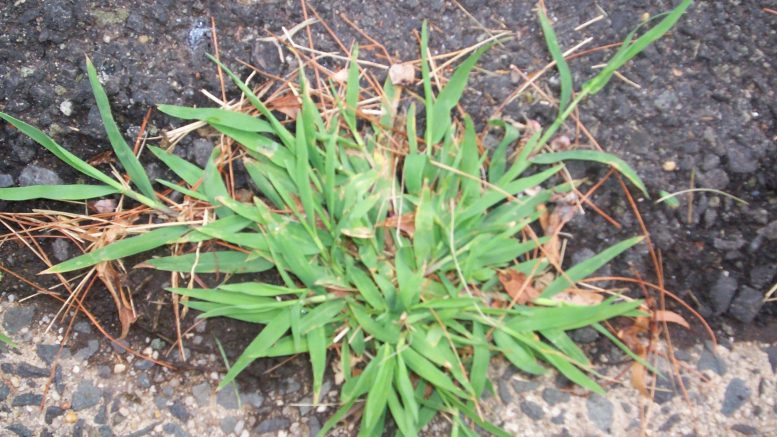
Herbicide Resistance Action Committee in Brazil Reported the First Case of Digitaria nuda Resistance to Haloxyfop
Brazil
Anvisa published the voluntary withdrawal of toxicological evaluation of pesticides of 7 technical products; and approved, in compliance with court decisions, the toxicological evaluation of imazethapyr 700 g/kg WG (SOLUS), ethiprole 200 g/L SC (BIORISK), isoxaflutole 750 g/kg WG (TECNOMYL), clomazone 500 g/L EC (BRILLIANCE), sulfentrazone + diuron (RAINBOW), clethodim + haloxyfop-P-methyl (AGROBEATS), and AGROZINAM 500 SC (SYNROM). (Official Gazette of Brazil, Res. 1566, 1570-1579 – published on 04/22/26, Anvisa)
The Ministry of Agriculture of Brazil revoked the precautionary suspension and restored the validity of 11 pesticide registrations after requirements set out in Notice No. 1 of 2025 were met, involving technical and formulated products based on 2,4-D and glyphosate. The Ministry stated the measure was taken “without prejudice to the communication to the companies holding the registrations regarding this administrative decision and the penalties for non-compliance with the provisions set out in said Notice”. (Official Gazette of Brazil, Act No. 22 – published on 04/16/26, MAPA)
Leonardo Araújo is the new commercial director of Ourofino Agrociência in Brazil. (Ourofino Agrociência)
Galvani avoided the emission of 58.5 thousand tonnes of equivalent CO₂ in 2024 [most recent data] by replacing fossil fuels with biomass in its industrial operations. According to the company, its decarbonization strategy also includes certified renewable electricity, a corporate emissions inventory, and investments in energy efficiency in fertilizer production. (Galvani)
A research indicated the morning glory weed Ipomoea hederifolia can act as a reservoir for the leaf-mining moth Bedellia somnulentella, a sweet potato pest. Although the insect has better performance on Ipomoea batatas, the researchers found that the weed also allows the pest to complete its life cycle, helping maintain populations between crop cycles and increasing infestation pressure in the field. (Federal University of the Jequitinhonha and Mucuri Valleys)
The Agricultural Research and Rural Extension Company of the State of Santa Catarina is evaluating spraying techniques on orchards using drones in Videira, State of Santa Catarina, to define parameters such as flight height, spraying volume and product mixtures. The tests involve crops such as peach, plum, nectarine and grapevine, with the aim of refining the use of this technology in fruit production with greater safety and efficiency. (Epagri)
The Federation of Agriculture and Livestock of the State of Mato Grosso warned farmers about scams involving irregular offers to buy and shred empty pesticide packages. The entity stressed that returns must follow the official reverse logistics system only, with delivery to authorized collection points and issuance of an official receipt, otherwise producers may face legal and environmental penalties. (Sistema Famato)
Embrapa`s Soybean Unit has launched a manual with guidelines for the collection, characterization, preservation and maintenance of microbial culture collections, focusing on diazotrophic bacteria and plant growth-promoting bacteria. The publication is intended to support research, innovation in biological inputs and the standardization of laboratory procedures amid the expansion of these inputs in Brazil. (Embrapa)
UPL has renewed for another three years its partnership with Rabobank for financial operations aimed at agribusiness, with an annual volume exceeding US$ 500 million. According to the company, the agreement includes a securitization operation of around US$ 200 million to expand farmers and distributors’ access to credit for input purchases. (UPL Brasil)
Coamo Agroindustrial Cooperative and Yara fertilizer company have signed a non-binding memorandum of understanding to evaluate a potential partnership at the port terminal planned by the cooperative in Itapoá, State of Santa Catarina. The project, with construction expected to begin in 2027 and operations in 2030, is designed to handle vegetable dry bulk and fertilizers, with an estimated capacity of 9.3 million tonnes per year. (Coamo; Yara)
A research identified, for the first time in Brazil, an association between the beetle Diabrotica speciosa and a member of the Fusarium oxysporum species complex in soybean farms. The results indicate the insect may act as a potential vector of the pathogen, increasing the spread of root rot. (Federal University of Santa Maria; Federal University of Rio Grande do Sul; Federal University of Viçosa)
Ministry of Agriculture published the rejection of 1 pesticide registration and cancellation of 8 registration requests. (Official Gazette of Brazil, Act No. 23 – published on 04/22/2026, MAPA)
Brazil’s fertilizer imports reached a record for March in 2026, totaling 3.41 million tonnes despite sharply higher prices. The average import price in March was US$ 382.6 per tonne, 22.8% higher than in the same month of 2025. (Comex)
The Herbicide Resistance Action Committee in Brazil reported the first record of Digitaria nuda resistance to haloxyfop, a Group 1(A) herbicide in the acetyl-CoA carboxylase inhibitor class. The case was confirmed in Rio Verde, State of Goiás, by researchers from Corteva, Adama, Esalq and UPL, and has already been included in the International Herbicide-Resistant Weed Database. According to the committee, the finding highlights the need to monitor field escapes and adopt preventive measures such as integrated weed management, herbicide rotation with different modes of action, proper application technology, elimination of surviving plants and machinery cleaning. (HRAC-BR)
Embrapa took part in a strategic meeting with the Secretariat of Agriculture, Development and Innovation of the State of Roraima, the Ministry of Agriculture, and with partner institutions and representatives of the productive sector to discuss the implementation of the National Fertilizer Plan guidelines in the State. According to the company, the initiative could lead to the development of a State Fertilizer Plan aimed at reducing dependence on external inputs, strengthening local research and increasing the autonomy of agriculture in the State of Roraima. (Embrapa)
Brazilian Government has included fertilizer and pesticide production among the priority sectors under “Brasil Soberano 2”, a program backed by US$ 3 billion in credit to be operated by the Brazilian Development Bank. According to the government, the credit lines should open within 30 days and are intended to reduce external dependence in strategic supply chains amid international instability. The measure is also aligned with the National Fertilizer Plan, which seeks to expand domestic production over the coming decades. (Government of Brazil; Ministry of Finance)
A 56-year-old man was arrested in Luís Eduardo Magalhães, State of Bahia, after being caught transporting pesticides with no proven origin during an operation carried out by the Bahia State Traffic Department with support from the Bahia Military Police. 400 kg of DK MAX [atrazine] and 200 liters of BRAVONIL [chlorothalonil] were seized. (State of Bahia Military Police)
The Agriculture, Livestock, Supply and Rural Development Committee of the Brazilian Lower House of Congress discussed the impacts of budget contingency measures on agricultural defense. The public hearing was requested by Congressman Márcio Honaiser, author of Complementary Bill No. 95/2024, which seeks to prevent spending related to agricultural defense from being frozen, including plant and animal health surveillance, product inspection and oversight of agricultural inputs. (Agência Câmara de Notícias)
The National Union of the Plant Protection Products Industry has started a new term with the appointment of Antonio Mauricio Haddad Marques as chairman of its Board of Directors for 2026–2029. According to the entity, the executive, who has worked in the management of Bequisa Indústria Química do Brasil since 2010, takes office with a focus on strengthening the sector’s institutional representation based on data and scientific support, while also promoting good practices for the correct and safe use of crop protection products. Júlio Borges Garcia, from IHARA Defensivos Agrícolas, will serve as vice chairman of the board. (Sindiveg)
Compatibility between bioinputs and chemical products has become a more prominent topic in agriculture as farmers seek greater efficiency in spraying. According to Fernando Souza, founder of Ag4study, compatibility cannot be generalized because chemical formulations may differ even with the same active ingredient, while biological inputs also depend on the specific strain of each microorganism. He says a mixture should only be considered compatible when the biological input maintains its development in the presence of all products in the tank mix. He also warns that compatibility tables may not reflect real application conditions. (Ag4study)
State of Rio Grande do Sul’s Agricultural Defense Authority has launched a task force to prevent the entry of giant pigweed (Amaranthus spp.) into the State after a confirmed occurrence of the weed was identified on a farm in Campo Erê, in the western region of the State of Santa Catarina, about 100 km from the border with Rio Grande do Sul. According to the authorities, the response includes a phytosanitary alert, farm visits, inspection of agricultural machinery, guidance on certified seeds, quarantine and eradication measures at the affected site, surveys in neighboring areas and outreach to farmers for the immediate reporting of suspected cases. Considered highly aggressive and difficult to control, the weed can grow up to four centimeters per day, produce between 100 thousand and 1 million seeds per plant, and cause significant losses in crops such as soybean and corn. (SDA; Cidasc)
Bioinputs still have low adoption in the south region of the State of Rio Grande do Sul, despite their potential to reduce costs and emissions in agriculture. According to researcher Maria Laura Turino Mattos, the technology is already well established in other regions of the country, but still faces cultural resistance among farmers in the State, even with scientific backing and official registrations. (Embrapa)
A research concluded that the silverleaf whitefly Bemisia tabaci MEAM1 can complete its life cycle on eucalyptus genotypes under controlled laboratory conditions. Development was faster and viability was higher on soybean, while Eucalyptus camaldulensis showed intermediate performance and the hybrid Eucalyptus urophylla × Eucalyptus grandis had a longer cycle and lower survival. The authors note the findings are still preliminary, but they indicate that eucalyptus may serve as a host in forest and agroforestry systems. (Esalq; Agricultural and Forest Entomology)
Terra Agro Holding has announced changes in its corporate governance and executive structure as part of its 2026 expansion plan. A subsidiary of Ihara and controller of Terra Tecnologia, focused on serving farmers, and Campo Total, focused on input distributors, the company announced the return of former partners: José Luiz Lima Salgueiro has taken over as commercial director, while Luiz Carlos Almeida França has joined the Board of Directors. (Terra Agro Holding)
Scotiabank reduced the target price of Mosaic stock to US$ 33 from US$ 35 while maintaining an outperform rating, citing near-term pressure on phosphate margins. According to the bank, the company is facing higher ammonia and sulfur costs and has limitations to completely transfer such price increases to buyers. In Brazil, Mosaic announced earlier this month it will idle the Araxá complex and related activities in Patrocínio, both in the State of Minas Gerais, which is expected to reduce the company’s annual phosphate production by about 1 million tonnes. (Scotiabank; The Mosaic Company)
Delays in pesticide registration continue to drive lawsuits in Brazil, according to an analysis by AllierBrasil. Although in 2025 there was a record number of approvals, reaching 912 products, the average approval time for formulated and technical chemical products remained above five years, pushing companies to seek lawsuits to speed up regulatory assessments. According to Flavio Hirata, partner at the consulting firm, lawsuits are no longer an isolated practice and have become part of the regulatory strategy of the sector amid low predictability and slow processing times. “As of April 22nd, 2026, Anvisa approved 47 toxicological evaluations of pesticides in accordance with court decisions. Data from Ibama are not yet available”. (AllierBrasil)

Latin America
According to Roberto Muñoz, member of AgroCare, geopolitical pressure and changes in the global market have once again raised agrochemical costs and increased pressure across the sector’s value chain. According to him, higher energy, logistics, and input costs, combined with Asia’s strong weight in global supply, already require earlier purchasing and greater strategic adaptation in Latin America. (AgroCare)
Syngenta obtained in Argentina the first commercial approval for the herbicide metproxybicyclone, a new active ingredient aimed at controlling resistant grass weeds in soybean and cotton. The molecule was developed to target weeds resistant to widely used herbicides such as glyphosate and clethodim. (Syngenta)
In Argentina, rising prices of fertilizers are already putting pressure on wheat ahead of planting for the next crop. Urea prices have nearly doubled since late February, reaching around US$ 1,000 per tonne, prompting farmers to reconsider fertilizer use and, in some cases, shift toward alternative crops such as barley or oats. The Rosario Board of Trade said the country harvested a record 29.5 million tonnes of wheat in the last season, but higher urea costs could weigh on the production outlook for the new crop. (Rosario Board of Trade)
Authorities from 19 provinces in Argentina met in Paraná, the capital city of Entre Ríos province, for the Third Working Meeting on phytosanitary packaging recycling under National Law No. 27279. The event, promoted by the civil association Campo Limpio, discussed challenges to consolidate the circular economy model, focusing on traceability, interjurisdictional movement of recovered plastic and cultural change in the proper handling of containers. According to participants, adapting the system to different territorial realities and strengthening shared responsibility between the public and private sectors will be key to expanding the system across the country. (Campo Limpio)
In Mexico, the global fertilizer crisis is already pushing prices higher and increasing risks for food production. According to Juan Carlos Anaya Castellanos of the Agricultural Markets Consulting Group, between February 20th and March 27th, urea prices rose 25.8%, diammonium phosphate 26.4% and monoammonium phosphate 28.7%. Mexico consumes more than 5.5 million tonnes of fertilizers per year and relies heavily on imports, which heightens its exposure to the war in Iran, rising oil prices and tighter global supply. (GCMA)
Colombia was considering the possibility of buying Monómeros, the petrochemical and fertilizer company based in Barranquilla and controlled by Venezuela’s Pequiven, but Venezuela is no longer interested in selling the company under the current fertilizer market conditions. According to Colombia’s Minister of Mines and Energy, Edwin Palma, higher natural gas prices linked to the Middle East have increased the company’s strategic value, while talks with the Venezuelan State-owned company Petróleos de Venezuela S.A. continue on a possible resumption of gas trade between the two countries. (Minister of Mines and Energy of Colombia)